SMAT 2025 Preview: Shaping Stars for IPL and India’s Cricket Future
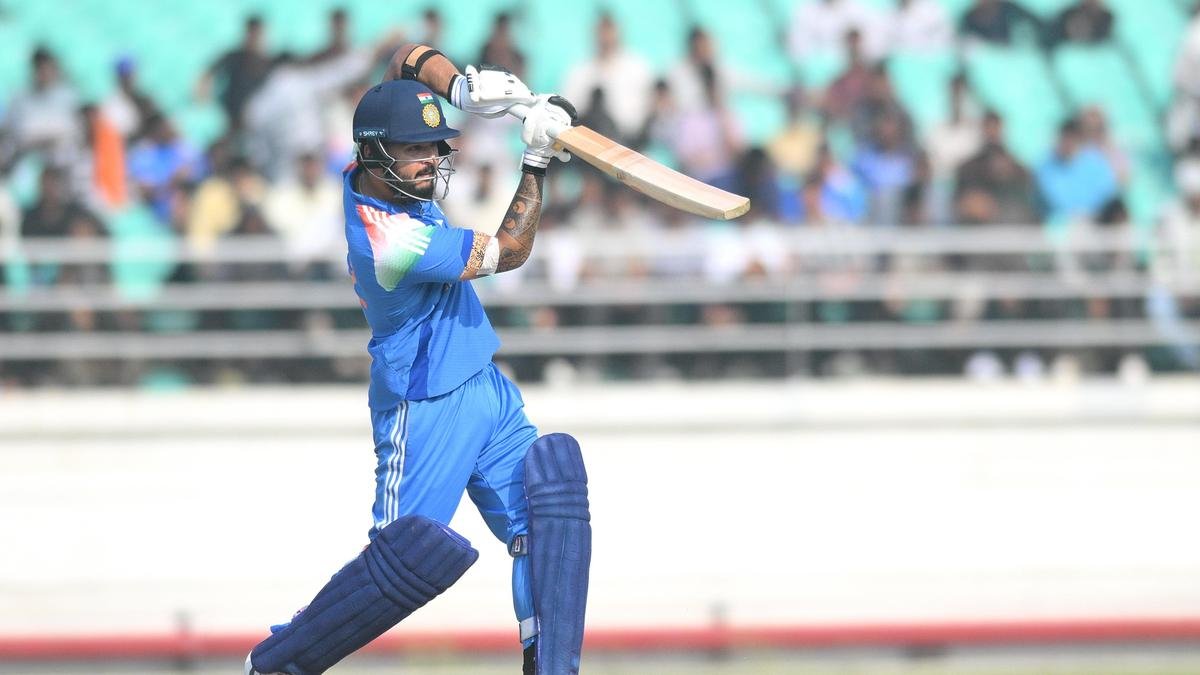
The Syed Mushtaq Ali Trophy (SMAT), a prominent domestic T20 competition in India, continues to echo the trends and demands popularized by the Indian Premier League (IPL). The upcoming edition, starting on November 26, is well-timed to act as a platform for players aiming to shine ahead of the IPL auction on December 16. This year, teams reaching the Super League phase will have played nine matches by the time of the auction, offering scouts a comprehensive view of player performances, unlike last year when the auction occurred after just one SMAT round.
Renowned coach and Kolkata Knight Riders scout, Biju George, emphasizes the significance of SMAT in the IPL auction process, stating, “Any IPL will be won by a team that has a strong Indian core,” in a conversation with Sportstar.
Reflecting the demands of international cricket, the Indian domestic schedule now features a rigorous sequence. Players will transition from five intense rounds of four-day Ranji Trophy matches to high-octane T20 gameplay with only a week’s rest. The introduction of the Elite (32 teams) and Plate (six teams) divisions in SMAT this season strives to increase competition and fairness, ensuring no easy matches. The Elite division employs an eight-team round-robin Super League phase culminating in the final on December 18.
This season, however, will see fewer star players due to India’s concurrent white-ball series against South Africa, which overlaps with SMAT. Key players like Suryakumar Yadav and Shivam Dube from last season’s winning Mumbai team, alongside others such as Hardik Pandya, Sanju Samson, Axar Patel, and Varun Chakaravarthy, may miss the Super League phase due to international commitments.
Without the presence of these stars, players on the fringes, such as Riyan Parag from Assam and Venkatesh Iyer from Madhya Pradesh, will have the opportunity to take center stage. Experienced IPL performers released by their franchises will also aim to make a compelling case, including Deepak Hooda, Ravi Bishnoi, Vijay Shankar, Mayank Agarwal, Rahul Tripathi, and Prithvi Shaw, each competing for the 46 Indian player slots available in the auction.
Formerly fast-tracked to the Indian team following a standout IPL season with Kolkata Knight Riders, Venkatesh Iyer enters SMAT as a released player determined to prove his worth again after a subdued 2024 campaign.
National Considerations
While India’s T20I team appears stable, the quest for a reliable seam-bowling all-rounder to support Hardik Pandya continues. The Impact Player rule in the IPL has stifled some all-rounders’ development, yet SMAT has still managed to highlight talents. Last season, seven players, including Prerak Mankad and Shahbaz Ahmed, achieved the notable feat of scoring over 200 runs and taking five or more wickets, suggesting potential future all-rounder candidates.
Additionally, identifying a secondary tier of fast bowlers remains crucial for India’s strategic plans. With Arshdeep Singh as a strong lead, the gradual phasing out of Mohammad Shami and managing the workloads of Mohammed Siraj and Jasprit Bumrah have highlighted a thin pace line-up. Khaleel Ahmed and Avesh Khan are prevalent in the IPL but haven’t consistently performed internationally. If Auqib Nabi from Jammu and Kashmir can translate his Ranji success to the white-ball formats, both Indian cricket and the IPL could reap the benefits.
Evolution in Play Styles
The changing nature of T20 cricket, reflecting soaring run rates from the IPL, influences domestic games like SMAT. Despite not employing the Impact Player rule last season, SMAT achieved its highest aggregate run rate at 8.57. Power hitting remains a significant draw for franchises, with Priyansh Arya and Urvil Patel’s breakthroughs underlining this evolution. Their impressive strike rates, 176.63 and 229.92 respectively, caught the attention of Punjab Kings and Chennai Super Kings, leading to their retention before this year’s auction.
Biju George explains that most IPL teams look for players with strike rates between 150 and 170, while those with anchoring roles should aim for more than 140.
Despite the heavy reliance on statistics and data analysis, certain qualities that only the human eye can discern are still crucial in player evaluation. “I personally would like to see some practice sessions too. It helps gauge a player’s engagement and composure in pre-match preparations and how they handle challenging situations,” George elaborates.
With 125 matches scheduled in the Elite division over 20 days, SMAT promises to attract significant attention. “We watch every match. Each franchise has eight to nine scouts observing every ball,” assures George.
Published on Nov 24, 2025
More stories from this issue









Post Comment