Ruturaj Gaikwad’s Masterclass: Anchoring the Innings with a Century’s Grace
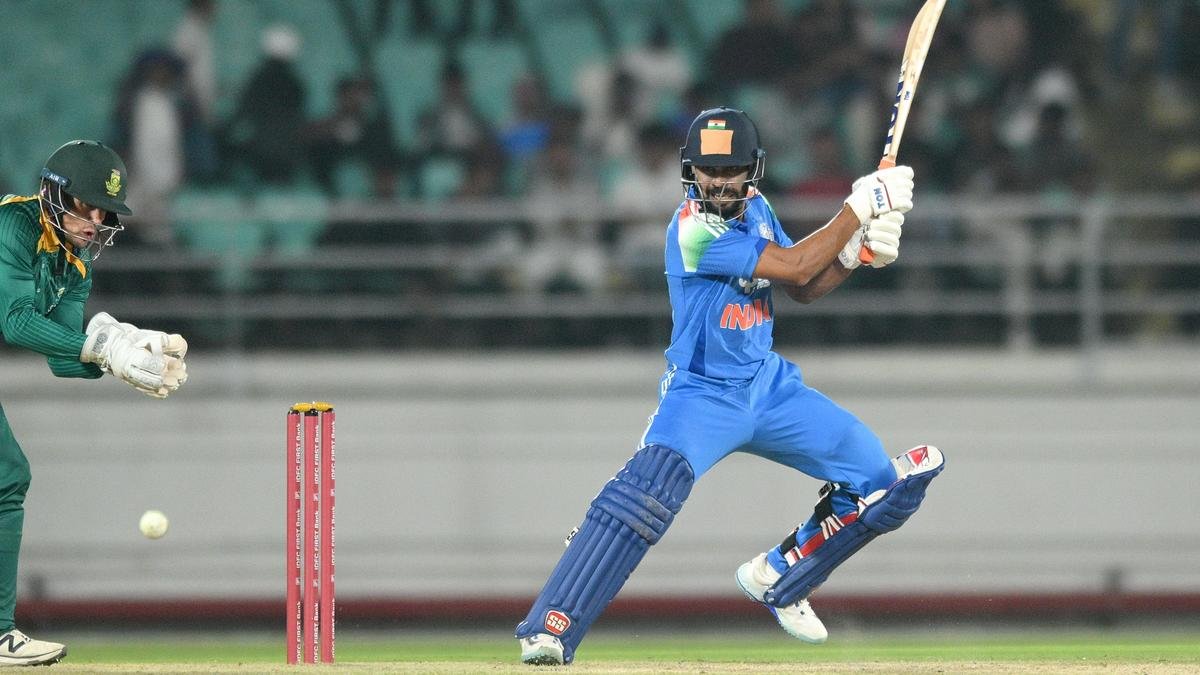
In today’s cricket landscape, where high strike rates and big hits dictate the pace of white-ball games, Ruturaj Gaikwad’s composed innings of 117 from 129 balls at the Niranjan Shah Stadium on Thursday showcased the enduring value of the modern anchor—a player who steadily advances a chase without resorting to flashy strokes.
India-A’s challenge of chasing down 286 against South Africa-A in the first One-Day match turned out to be more demanding than anticipated. The pitch offered grip, particularly aiding slower deliveries, and made stroke play challenging, yet it provided consistent bounce that rewarded batsmen who were ready to settle in. South Africa-A’s batsmen, Dian Forrester (77) and Delano Potgieter (90), demonstrated this in their innings, and Gaikwad later reaffirmed it with even more authority.
The decision by Marques Ackerman to bat first proved to be strategic. While Rajkot is known for being conducive to batting, successful chases here require careful calculation in the absence of dew. South Africa-A’s early slip to 16 for four had them on the back foot, but their recovery, led by Forrester’s calmness and Potgieter’s precise timing, created a guide on how to play the pitch.
The 28-year-old Gaikwad followed this strategy almost flawlessly. He started confidently with Abhishek Sharma, who was tasked with making the most of the PowerPlay overs. When Abhishek’s dismissal disrupted the innings’ early flow, Gaikwad took on a stabilizing role while maintaining the scoring rate. He was judicious with aerial shots, only attempting the upper cut over the wicketkeeper after thoroughly assessing the pitch. By his second such shot, he had already reached his century.
Gaikwad’s innings was a reminder to the Indian management of the ongoing relevance of anchors, especially in One-Day cricket. Alongside Tilak Varma, he built a partnership of 89 runs through smart rotation of strike. When Tilak found it difficult to locate gaps, Gaikwad used the sweep and pull against spinners to maintain momentum, thus buying time for his partner to settle. Tilak ended with 39 off 58 balls, featuring only two boundaries, as Gaikwad made sure South Africa-A couldn’t apply sustained pressure.
His century, celebrated with a pickup shot over midwicket for four, reflected mastery and awareness. Gaikwad’s performance poses a larger question for India’s white-ball strategy: In a setup focused on players with standout abilities, where does a player with Gaikwad’s more nuanced skills fit? Despite having played six ODIs and 23 T20Is for India, most recently in early 2024, he remains on the fringes, overshadowed by more flamboyant players.
Gaikwad’s innings highlights that the craft of anchoring is far from obsolete, and India’s selectors may need to reassess its importance, particularly in ODIs, where Gaikwad has amassed 4,441 runs at an impressive average exceeding 56.
Published on November 14, 2025









Post Comment