Ruturaj Gaikwad at No. 4: Navigating India’s Batting Conundrum
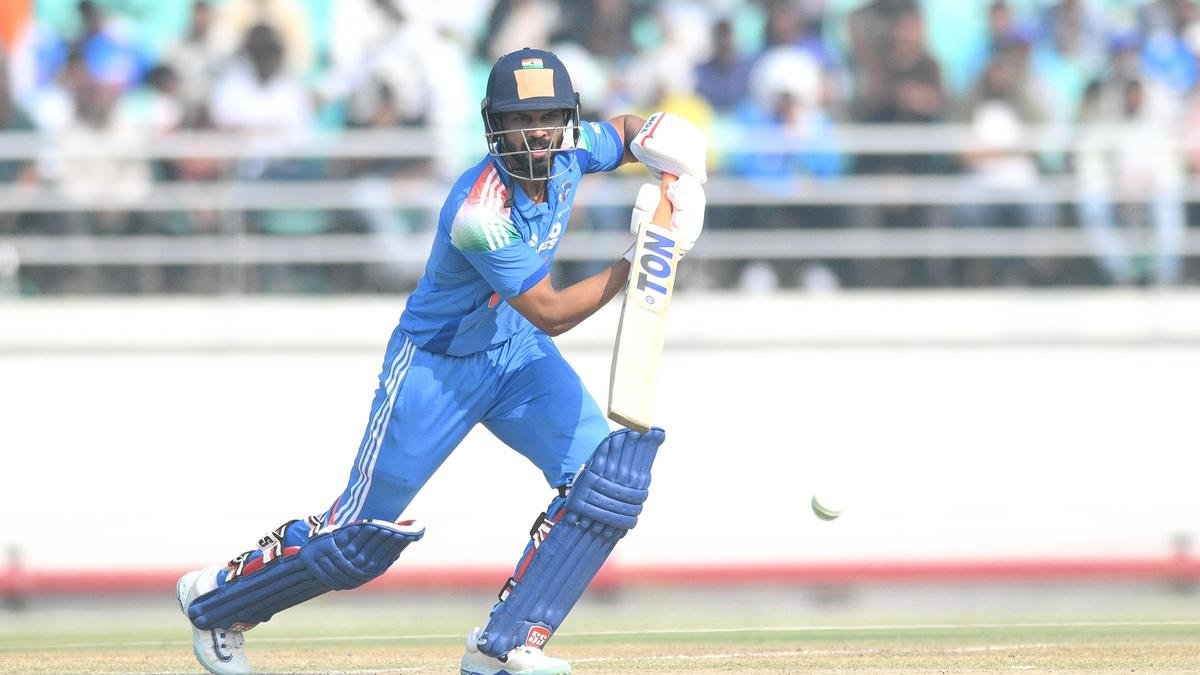
Ruturaj Gaikwad is a standout in Indian cricket, consistently maintaining an average above 55 in List A matches. He is celebrated for his elegance, control over pace, and technical prowess, solidifying his status as one of India’s dependable 50-over batsmen. However, during his return to the national team in Ranchi after a 16-month hiatus, Gaikwad faced a new challenge: batting at No. 4 for the first time in his 87th List A innings. Before this, he had predominantly opened the innings, with just five innings at No. 3.
Gaikwad found himself filling the No. 4 position due to Shreyas Iyer’s ongoing recovery from an injury. The squad announcement initially highlighted Tilak Varma, Rishabh Pant, and Dhruv Jurel as the main contenders for this spot, without mentioning Gaikwad. Furthermore, his opportunity arose only because Shubman Gill, the vice-captain, was sidelined with a neck spasm; otherwise, Gaikwad would have been leading Maharashtra in the Syed Mushtaq Ali Trophy.
At 28, Gaikwad entered the game in a different role under the guidance of his IPL mentor, Mahendra Singh Dhoni, in a setting where he had never previously played in domestic white-ball cricket. His inclusion in this unusual role reflects a broader pattern in the Indian team: experimental roles and lack of continuity under head coach Gautam Gambhir’s leadership.
India’s strategies in recent series have been marked by frequent lineup changes and role ambiguity. This was evident during a home Test series defeat to South Africa, where different batters were shuffled in the No. 3 slot. Sudden changes, like dropping B. Sai Sudharsan after a standout performance and promoting Washington Sundar to an unfamiliar position, have left players destabilized, affecting their confidence and performance.
The resulting uncertainty has impacted players’ mindset, shifting their focus towards preserving their spot rather than making a significant impact. Critics argue that the problem lies not in the players’ capabilities but in the lack of strategic clarity from the management team, namely Gambhir and chief selector Ajit Agarkar.
Traditionally, the selection process involves the captain and coach providing input, with the selection committee finalizing the squad, while the playing XI is decided by the team management. However, the current setup suggests blurred lines, as seen during lengthy deliberations for squad selections.
Gaikwad’s case of being shuffled into a new role is indicative of broader issues – role instability, differing expectations across formats, and a lack of transparent planning. As Indian cricket undergoes a critical transition following the exits of icons like Rohit Sharma and Virat Kohli from specific formats, the challenge lies in managing this phase effectively to avoid prolonged rebuilding.
For India, which continues to be a strong force globally, upcoming tournaments like the T20 World Cup, ODI World Cup, and the World Test Championship cycle, call for decisive clarity in player roles, selection strategies, and consistent communication. Without such clarity, the system risks turning talent into untapped potential and losing momentum.
Success hinges on Gambhir and Agarkar’s ability to convey a unified direction to the team. Otherwise, the scenario witnessed in Ranchi, with Gaikwad’s uncertainty, could become a frequent occurrence. As Gaikwad remains in anticipation of clarity, so does the future of Indian cricket.









Post Comment