Epic 781-Run Showdown Highlights Women’s ODIs’ Transformative Journey in T20 Age
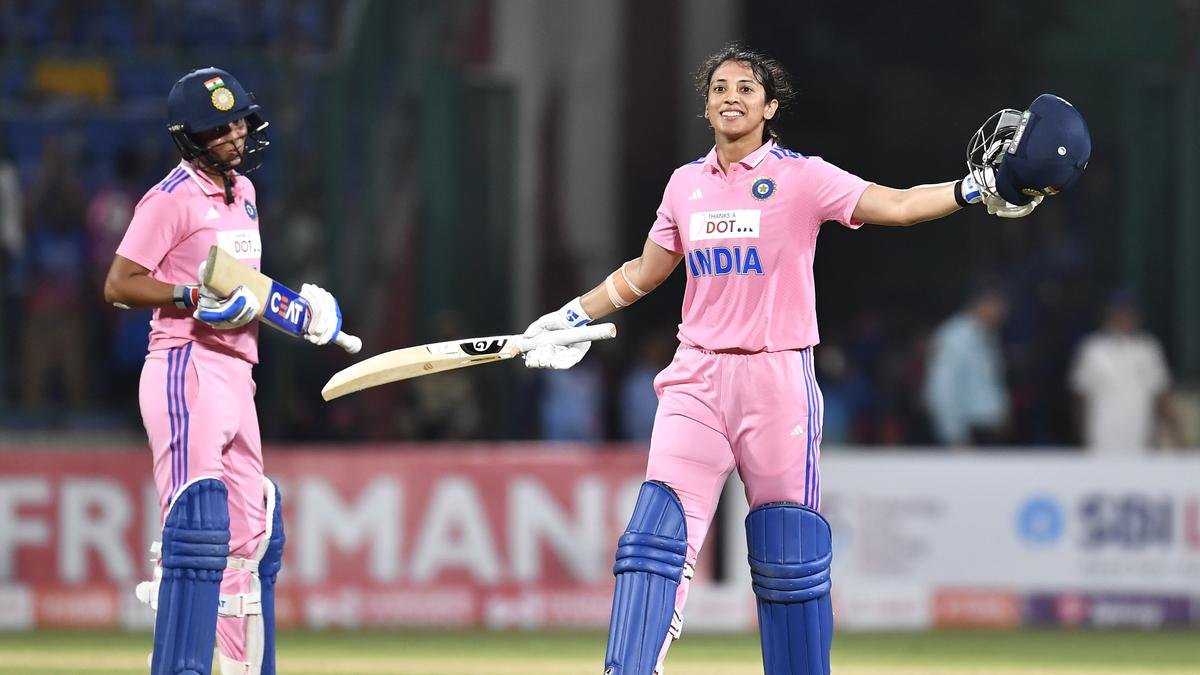
India and Australia combined to score an impressive total of 781 runs in the decisive match of their recent three-game ODI series in New Delhi. What began as an ordinary contest turned into one of the most remarkable one-day matches in the history of women’s cricket, with numerous records being broken during the encounter.
For those who appreciate drama, the timing of this match was impeccable. How often do you witness the sport’s most dominant team caught off guard, searching for solutions? With less than two weeks until a World Cup in the same country, this game has positioned itself as potentially the single greatest promotion for the tournament.
Women’s World Cup – Team SWOT Analysis
- Sri Lanka squad SWOT analysis: Chamari Athapaththu’s focus with a challenge for young players
- Bangladesh squad SWOT analysis: Nigar Sultana as a steady figure, with promising youth
- Australia squad SWOT analysis: Defending champions still lead, but not as unbeatable as before
- England squad SWOT analysis: A standout captain and formidable spin options in focus
- New Zealand squad SWOT analysis: An experienced core with emerging talent aiming to repeat T20 successes
- South Africa squad SWOT analysis: A spirited team led by Britz-Wolvaardt that must avoid over-reliance
- Pakistan squad SWOT analysis: Fatima Sana leads a hopeful group seeking to make an impact
- India squad SWOT analysis: In-form India is the team to beat on home soil
Progress Over Time
The only constant is change. As clichéd as it sounds, this has been true for the ODI format over the last decade. W.V. Raman, former head coach of the Indian women’s national team, notes, “There has been a shift with growing numbers, higher average scores, and a different approach to playing the format.”
“With numerous spinners now in the game, batters are pushing to increase the scoring pace, influenced by T20s, which has been an exciting turn for the format,” he adds.
Raman, closely connected to the team during its evolution in T20s, recalls the previous lack of confidence and fear of failure that the team has since overcome.
“ODIs were once a comfort zone, offering time for players to settle in. With the rise of T20 leagues, scoring at the pace normal in men’s cricket became more prevalent. Today, 200+ scores are common in T20s, changing how ODIs are approached,” Raman explains.
Since India last hosted the 50-over World Cup in 2013, there have been 66 instances of 300+ totals in women’s ODIs. Of these, 36 have occurred after the 2022 World Cup, with India claiming nine out of its 13 300+ totals in the past two years—an acknowledged priority for the team.
Adapting to specific conditions is part of this strategy. Players like Ellyse Perry and her Royal Challengers Bengaluru teammate Smriti Mandhana have reshaped their games, adapting to the demands of modern cricket. From elegance, often associated with a slower pace, Smriti has transformed into a dynamic player, aligning with the game’s evolution.
Smriti is the leading run-scorer in the format since the 2022 World Cup with 2100 runs, and she has scored eight out of India’s 15 centuries in this period.
Lisa Sthalekar, a 2013 World Cup winner with Australia, attributes this shift to revised PowerPlay strategies influenced by the T20 era.
“Ten years ago, the strategy was to survive the PowerPlay with wickets intact for a strong finish. Now, it’s about playing at a T20 pace even in ODIs,” she tells Sportstar.
Covering All Bases
The increasing uniformity of pitches worldwide is a key factor in performance changes.
“Without knowing a venue, you wouldn’t guess the location just by the pitches, as ICC has somewhat standardized them,” notes Raman.
Dispelling old beliefs about spin-dominant Indian pitches, Sthalekar comments, “India is no longer producing dust bowls. Instead, they’re offering chances for fast bowlers with more pace and good carry. This perception comes from the past.”
Globally, adaptation has tracked nicely with evolving game demands. Indian cricket has focused on developing a potent pace attack since Raman’s tenure, continuing under Amol Muzumdar. The search for a pace-bowling successor to Jhulan Goswami is ongoing, but concentrated national camps and the Women’s Premier League are aiding development.
As India addresses its pace challenges, globally, teams are catching up in spin. England enters the World Cup with a strong spin lineup, while Australia has consistently adjusted well. Despite narrow margins, India remains strong in spin, with Deepti Sharma capturing 59 wickets in this cycle.
India’s growing confidence is buoyed by its young talents seizing opportunities. The Women’s Premier League has surfaced promising players like pacer Kranti Goud and spinner N. Shree Charani, allowing India’s selection process to take risks with fresh faces, signaling a notable shift in attitude.
“It’s not about tenure anymore. It’s about choosing the right people for the needs of competition or bilaterals. These decisions must be immediate and relevant,” says Raman.
The Big Picture
ODIs were the foundation of women’s cricket, unlike male cricket, where Test matches reign supreme. “We don’t have a World Test Championship equivalent,” states Sthalekar. Test cricket for women is limited to Australia, England, India, and South Africa, with Australia and England playing most regularly.
“Without higher aspirations, ODIs remain the pinnacle,” she adds.
Though T20s exert influence, ODIs bring stability and vital funding through the Future Tours Programme. This is essential where financial resources are limited and heavily determine team competitiveness—a discussion still in its infancy.
Sthalekar calls for consistent worldwide investment. “While T20s may lead, including ODI matches in tours is vital. The ICC is strategizing for including the second tier, though financial limitations complicate providing ideal opportunities,” she acknowledges.
By 2029, the Women’s ODI World Cup will expand to 10 teams. Competitiveness in recent qualifiers promises exciting advancements for women’s cricket, paired with growing viewership and the sport treated increasingly as a business.
“There’s incentive to innovate. Risk-averse approaches aren’t sustainable for incoming generations. Governing bodies now see the sport as an evolving business. Forward-thinking is no longer decade-based but requires regular evolution,” Raman concludes.









Post Comment