Dot Ball Dilemma: Slow Scoring Risks India’s ODI World Cup Hopes
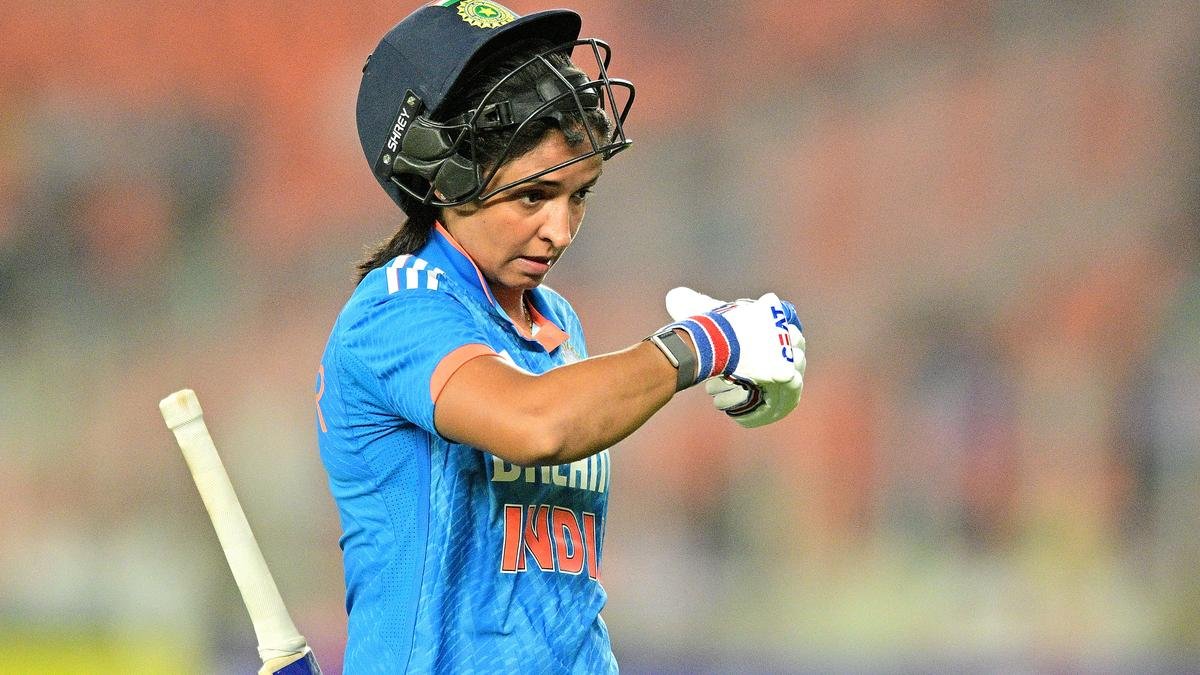
Head coach Amol Muzumdar faced a challenging day as Australia set a new record against India in a women’s World Cup league match at the ACA-VDCA Stadium on Sunday.
The press questioned him extensively about the guidance—or lack thereof—provided to the batters for turning a promising start into a score exceeding 350.
“Yes, of course [we guide them]. What do you think? Do we guide them or not?” he responded.
This exchange highlighted the depth of the defeat, especially on a day when India’s top order showed its potential in the tournament. Consecutive losses have forced India to confront tough conversations about team combinations and on-field execution.
Dot-ball percentage
According to CricViz data, India faced a concerning number of dot balls: 127 against Sri Lanka (42.8%), 173 against Pakistan (55.7%), 185 against South Africa (58.4%), and 128 against Australia (45.2%). Among the top five, Pratika Rawal had a 60.8% dot ball rate, Smriti Mandhana 56.4%, Harleen Deol 54.6%, Jemimah Rodrigues 53.9%, and Harmanpreet Kaur 53.1% in four games.
Comparing this to their yearly statistics, Harleen leads with a 62.8% dot rate, while Pratika follows closely with 60.8%.
This World Cup has seen Smriti dismissed early in the first three games, followed by Harleen and Pratika struggling to maintain momentum with strike rates of 74.74 and 72.58, respectively.
Pratika has faced criticism, though she has commendably stepped up for the omitted Shafali Verma. In 17 ODIs as Smriti’s opening partner before this World Cup, they failed to manage a 50-plus run partnership only four times, achieving seven fifty-plus stands, four 100-plus, and a record-breaking 233-run partnership against Ireland.
Pratika’s stability has been key to Smriti’s more aggressive batting approach. Acknowledging this pacing issue, Pratika’s development in this area could reduce early match jitters for India.
ALSO READ | Can India still qualify for Women’s World Cup semifinal after loss to Australia?
A deep batting lineup is less effective if the batters cannot strike at a pace that gives bowlers a chance to defend totals.
Bowling options
Having just five bowlers limits captain Harmanpreet Kaur’s gaming strategies.
Under Muzumdar and Harmanpreet’s leadership, India has favored a five-batter, five-bowler lineup, continued into this World Cup, swapping Renuka Singh and Amanjot Kaur to manage workloads.
Harmanpreet has had to bowl as the sixth option, with Pratika offering occasional overs. In contrast, Australia (eight), South Africa (seven), New Zealand (six), and England (seven) have more bowling options.
India maximizes Radha Yadav’s fielding skills as a substitute. However, her overall talents could be better utilized with a permanent spot in the playing eleven.
India must make changes before their crucial match against England on October 19, to avoid a case of too little too late – if it’s not already.
Published on Oct 13, 2025









Post Comment