Asia Cup 2025: India, Pakistan, and Bangladesh Embrace Pragmatic Play Over Star-Power Showmanship
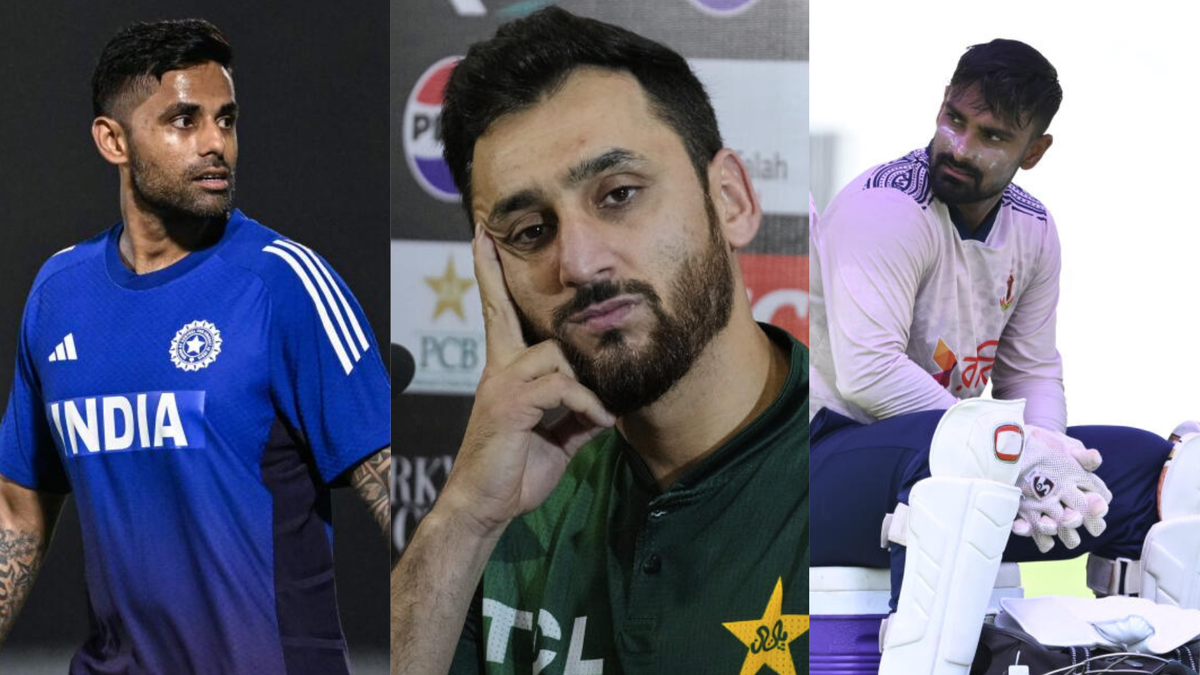
In South Asia, a region captivated by politicians, movie stars, and cricketers, change is rarely predictable. However, when transformation sweeps through the Indian Subcontinent, it often leads to significant shifts and the overthrow of regimes.
The forthcoming Asia Cup is set to bring about a similar cricketing transformation as India, Pakistan, and Bangladesh prepare to face off in an eight-team continental competition. The tournament kicks off on Tuesday in the neutral setting of the United Arab Emirates (UAE).
Despite their geopolitical differences, the three neighboring nations share a fervent devotion to their cricket stars. The fame of these athletes, boosted by social media fandoms, has become emblematic of their teams. Sri Lanka, which has been in a state of flux since its 2014 T20 World Cup victory, stands apart as a unique case.
This close connection between players and teams might seem inevitable, especially since India hasn’t participated in a major white-ball cricket tournament without either Rohit Sharma or Virat Kohli since 2010. Similarly, Pakistan last played a multi-nation limited-overs event without Babar Azam and Mohammad Rizwan in 2016, when Shahid Afridi was captain. Bangladesh has always fielded at least one of Shakib Al Hasan, Mushfiqur Rahim, or Mahmudullah in T20 World Cup or Asia Cup matches.
As these iconic figures have shaped their teams’ fortunes for over a decade, a new group of players is emerging to take their place, signaling a significant shift. In an era dominated by power-hitting, cricket selection increasingly favors pragmatic and role-specific contributions. This shift may redefine ‘star culture’ as we know it in the next decade of Asian cricket.
In cricket, much like method acting, players must align themselves with their team’s needs over personal glory. This adjustment involves players focusing on satisfying team requirements and relegating self-indulgence to the background.
The newfound T20 adventurousness of India, Pakistan, and Bangladesh shares a common underlying shift toward a horses-for-courses selection strategy, though the reasons for these changes differ across the nations.
Natural progression
Rohit Sharma and Virat Kohli retired last year with the coveted T20 World Cup medals but not before witnessing India’s evolving strategy toward a more aggressive T20 batting style, developed during their extended hiatus before the global event. After disappointing performances in the 2021 and 2022 T20 World Cups, India needed fresh talent to inject vigor into their batting approach. This revamp led to a focus on exploiting the PowerPlay, resulting in India scoring over 200 runs in seven of 21 completed innings. In the absence of Rohit and Kohli, India’s PowerPlay run rate surged to 8.31, improving from 6.02 in the 2022 T20 World Cup and 7.87 in 2021.
During the IPL 2023, Rohit and Kohli adapted their game, boosting their strike rates significantly. In 2024, they achieved their highest season strike rates of 150 and 154.69, justifying their return to the T20 World Cup.
Virat Kohli (left) and Rohit Sharma celebrate with the T20 World Cup 2024 trophy after defeating South Africa in the final. | Photo Credit: DEEPAK KR
Virat Kohli (left) and Rohit Sharma celebrate with the T20 World Cup 2024 trophy after defeating South Africa in the final. | Photo Credit: DEEPAK KR
Their title win was a fitting farewell and reaffirmed India’s shift towards a team-focused strategy. The structured succession planning initiated post-semi-final exit in 2022 has ensured a smooth transition for the Indian team.
Excluding captain Suryakumar Yadav, all-rounder Hardik Pandya, and Arshdeep Singh, India’s T20I lineup since has seen few constants, prioritizing resource optimization and role suitability over consistency and reputation. Omitting players like Shreyas Iyer and Yashasvi Jaiswal is seen as a necessary measure for maintaining an efficient team structure.
ALSO READ | India mulls over bowling combination in run up to title defence in UAE
Shubman Gill’s re-entry to the T20I squad, seemingly at Sanju Samson’s expense, indicates a continuation of ‘star culture,’ aimed at nurturing a potential all-format captain.
Rohit and Kohli’s reputations as star players are built on their prowess across all cricket formats, a status that might be elusive to emerging players like Abhishek Sharma, Tilak Varma, Shivam Dube, or Rinku Singh. Though Jasprit Bumrah excels in all forms, his sporadic availability might limit his ascendancy to similar heights.
The current Indian T20I setup resembles a highly competent and successful franchise operation, detached from past influences and aligned with its bold cricketing philosophy.
Going in circles
Preparedness sometimes contrasts with enforced change. Despite achieving a historic victory against India in the T20 World Cup 2021, Pakistan finds itself in the latter category.
Although Pakistan reached the World Cup final the following year, the performance was largely credited to their bowlers, as the batters struggled with a run rate of 7.91 in 2022—placing them seventh among the 12 ICC Full Members. Similar patterns emerged in 2023 and 2024, with run rates of 8.08 and 8.22, respectively.
Poor results, including a 2024 T20 World Cup group-stage exit and a loss to the U.S.A in a Super Over, highlighted the limitations of Babar Azam and Mohammad Rizwan’s adaptability. With 23 defeats in 38 T20Is over 2023 and 2024, Pakistan was prompted to reassess.
Pakistan’s Babar Azam and Mohammad Rizwan during a practice session ahead of the ICC Men’s Cricket World Cup 2023 match between Afghanistan and Pakistan. | Photo Credit: JOTHI RAMALINGAM B
Pakistan’s Babar Azam and Mohammad Rizwan during a practice session ahead of the ICC Men’s Cricket World Cup 2023 match between Afghanistan and Pakistan. | Photo Credit: JOTHI RAMALINGAM B
Pioneering a reformist approach, Pakistan dropped Babar and Rizwan for a five-match T20I tour of New Zealand, introducing debutant Hasan Nawaz and Mohammad Haris at the top order.
Despite modest averages in the Champions T20 Cup, both players impressed with their six-hitting prowess. Nawaz tallied 17 sixes in nine matches (second most), while Haris struck at nearly 152 runs per 100 balls during the tournament.
The selections embraced a ‘boom or bust’ approach to T20, exemplified by Nawaz’s initial struggles followed by a record-breaking 55-ball 105 to chase down a 205-run target, cementing the shifting tactical stance for Pakistan.
This tour also launched Salman Ali Agha’s tenure as full-time T20I captain, replacing the rotational leadership involving Babar, Rizwan, and Shaheen Afridi.
Subsequent series with Bangladesh saw Nawaz and Haris exchanged for new openers, further transforming Pakistan’s batting order. The teams underwent a mutual whitewash series, revealing Pakistan’s inconsistent resurgence.
Ironically, former PCB chief Ramiz Raja had lamented Babar’s Test team removal due to his marketability three weeks shy of the Asia Cup. Yet, the PCB currently has no player under the ‘A’ contract, a slot previously occupied by Babar and Rizwan.
In transition
In Bangladesh, the legacy players who lifted the team from obscurity have exited white-ball cricket. Rahim now plays only Tests, while Shakib, Mahmudullah, and Tamim Iqbal retired from internationals over the past two years.
Despite prior struggles in T20, Bangladesh’s recent series victories against Sri Lanka, Pakistan, and the Netherlands signal promising improvements. Although the home pitches are challenging for aggressive scoring, openers Parvez Hossain Emon and Tanzid Hasan have begun to set the tone effectively.
Bangladesh’s Tanzid Hasan plays a shot during the second Twenty20 international cricket match between Bangladesh and the Netherlands. | Photo Credit: Mosaraf Hossain/AFP
Bangladesh’s Tanzid Hasan plays a shot during the second Twenty20 international cricket match between Bangladesh and the Netherlands. | Photo Credit: Mosaraf Hossain/AFP
The combined efforts of the opening pair, middle-order batter Towhid Hridoy, and all-rounder Mahedi Hasan are vital in replacing Bangladesh’s golden generation of cricketers, though none have yet ventured into Test cricket.
The Asian cricket narrative reveals that perhaps those who embrace change rather than resist it fare better. Politics, movie plots, and cricketing philosophies have a natural lifespan, eventually outliving their usefulness.
The absence of dramatic storylines might require adjustment at the Asia Cup, but the risk posed by emerging T20 specialists in a multi-team tournament promises intrigue.
Published on Sep 09, 2025









Post Comment