Off Side: India’s Test Fortress Falters as Spin Loses Grip
India has long been known for its strong spin tradition in cricket. Even before the era of detailed analytics and matchup strategies, legendary spinners like Bishan Singh Bedi, Bhagwat Chandrasekhar, Erapalli Prasanna, and S. Venkataraghavan played pivotal roles in leveraging home conditions to India’s advantage. Together, they claimed 468 Test wickets on home soil, contributing to 14 wins in 51 home Tests where at least one of them participated. Their skillset helped establish a foundational philosophy for India’s success in domestic conditions.
In the early 1990s, after tough tours in Australia and South Africa, Mohammad Azharuddin and Ajit Wadekar revisited this spin-centric approach. Young talents like Anil Kumble, Venkatapathy Raju, and Rajesh Chauhan became central figures as India decisively defeated Graham Gooch’s England 3-0 in the 1992-93 series, with the trio taking a combined total of 46 wickets.
Despite the emergence of reliable fast bowlers such as Javagal Srinath, Venkatesh Prasad, Zaheer Khan, Ishant Sharma, and S. Sreesanth, spin remained at the core of India’s strategy. The iconic 2001 victory against Steve Waugh’s Australia in Kolkata was not just about VVS Laxman and Rahul Dravid’s heroics; it also highlighted Harbhajan Singh’s crucial 13-wicket haul, including a hat-trick.
From 1998 to 2008, the duo of Anil Kumble and Harbhajan Singh formed the backbone of India’s home dominance, amassing 356 wickets across 34 home Tests, with 14 wins. The mantle then passed to R. Ashwin and Ravindra Jadeja, who in 49 home Tests took an impressive 515 wickets and secured 35 victories, cementing one of the most formidable partnerships in Indian cricket history.
Between 1990 and 2024, India transformed its home ground into a stronghold, winning 87 out of 144 Tests. Under Gautam Gambhir’s leadership, however, India’s home performance has been erratic with four wins and four losses. This contrasts sharply with the consistency shown by previous captains like Anil Kumble (10 wins, 1 loss in 13 matches), Ravi Shastri (13-1-17), and Rahul Dravid (8-2-11), who all maintained India’s prolonged dominance at home.
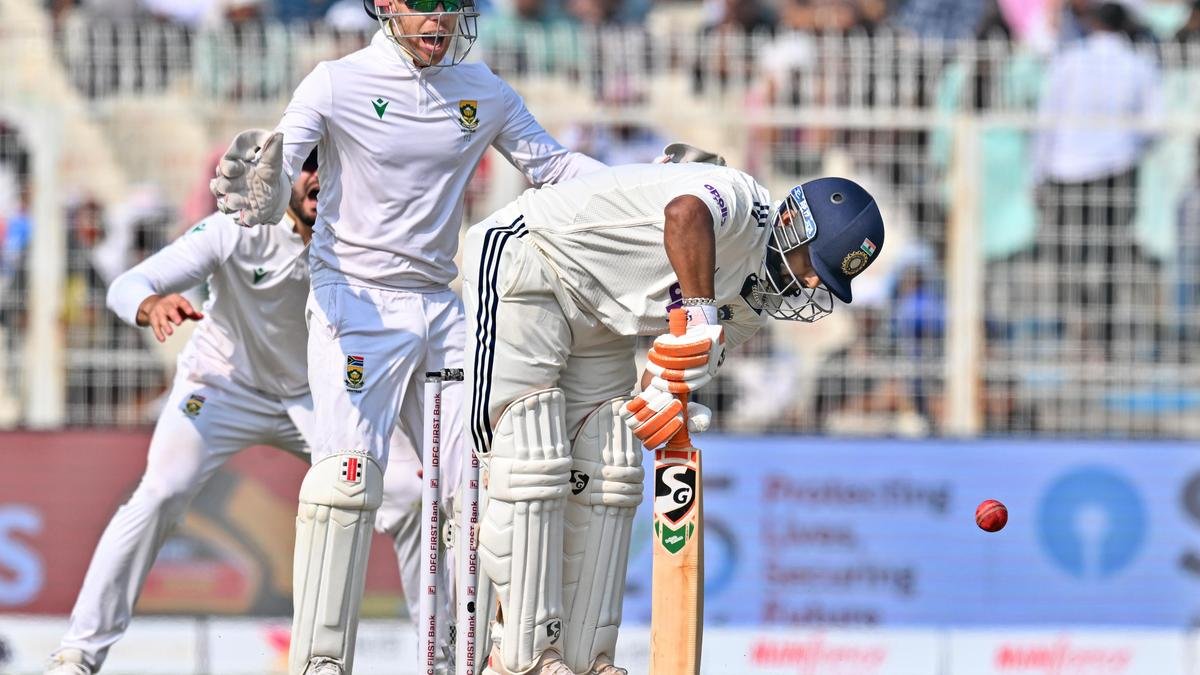
Recently, India has been outplayed by spin twice, first against New Zealand and then South Africa. In Kolkata, a pitch notorious for being balanced, the surface unexpectedly deteriorated on the first day, and India managed only 282 runs across two innings, losing 12 of 18 wickets to spin. Despite Gambhir’s assertion that India “got the wicket we wanted,” this strategy seems to have backfired.
This reactive approach can be traced back to earlier in the season in Delhi, where India’s spinners struggled against the West Indies on a flatter pitch. In the current context of the World Test Championship, where results are critical and draws are devalued, failing to capitalize on home advantage would likely weigh heavily on the team management.
The core issue now appears to be more about mental fortitude than pitch conditions. Former players like Dravid, Laxman, Ajinkya Rahane, and Cheteshwar Pujara honed their craft on challenging domestic pitches, where innings-building required immense patience and technique. Today’s young batsmen—such as Sai Sudharsan, Devdutt Padikkal, Washington Sundar, and Karun Nair—have had fewer opportunities to build such endurance, facing significantly fewer balls in domestic cricket.
This new generation is being thrust onto turning pitches for which they were not adequately prepared. Mistaking success in the IPL for readiness in Test matches has left Indian batsmen struggling between formats, as runs scored in T20s are not indicative of resilience in Test cricket’s later stages.
At the domestic Ranji Trophy level, there is a push for competitive pitches where batsmen must earn their runs. However, at the international level, India increasingly produces pitches that do not reflect this emphasis on preparation, nor the current capabilities of the team.
This raises a fundamental question: if today’s batsmen are not equipped for such conditions, why continue to prepare pitches that further expose these vulnerabilities? Spin has been a historical asset for India, but overreliance on it without adaptability could result in self-destructive outcomes.
Published on November 18, 2025










Post Comment