Ranji Trophy 2025-26: Unveiling Rising Stars and Key Strategic Battles
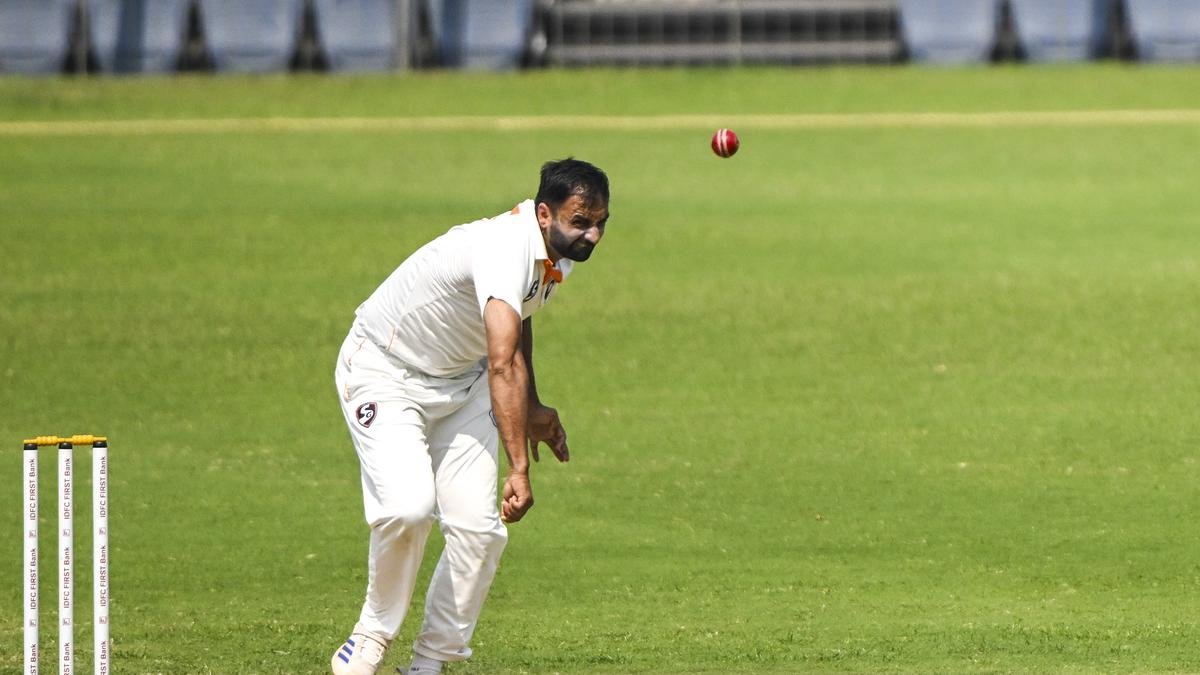
Over recent years, Indian cricket has been engaged in a familiar debate: do performances in the Indian Premier League (IPL) outweigh those in domestic cricket? While many players have earned national call-ups from IPL success, the Ranji Trophy remains the ultimate testing ground for those aiming to play in the longest format of the game.
Since the last season, the Board of Control for Cricket in India (BCCI) has mandated that all players, unless on national duty, participate in domestic tournaments, bringing a sense of order. Seeing established internationals in Ranji group matches has created a level playing field. As a former national selector once noted, each domestic season presents unique challenges, and selection priorities shift according to the national team’s needs.
What should be the focus this year?
Former Indian pacer Subroto Banerjee, recently part of the national selection committee, suggests this season should prioritize identifying and building a pool of quality fast bowlers and a few fast-bowling all-rounders, ready to step up when needed.
Workload management has been a major topic regarding India’s pace attack in recent months. Jasprit Bumrah played only three out of five Tests in England, while Mohammed Siraj bowled an impressive 185.3 overs, becoming the series’ leading wicket-taker with 23 wickets. This raised an important question: is India’s second line of Test pacers ready?
Though Prasidh Krishna and Akash Deep have shown promise, many feel the fast-bowling unit still lacks depth beyond Bumrah and Siraj, making this Ranji season crucial.
“Some players have performed well in domestic cricket, but it’s crucial to evaluate them based on their talent, without comparisons,” says Banerjee. “It’s impossible to find direct replacements for Bumrah or Siraj, but focus should be on whether a fast bowler possesses the necessary skills and can adapt to the demands of red-ball cricket,” adds the former pacer.
The Contenders
Among Indian pacers under 30, Akash has been outstanding in First-Class cricket over the past three years, with 109 wickets at an average of 27.44, already making a Test appearance. Earlier this year, he delivered a match-winning 10-wicket haul against England at Edgbaston.
Vijaykumar Vyshak, another Indian pacer under 30, has taken over 100 First-Class wickets since 2022. The Karnataka bowler impressed in the IPL with his death overs performance for Punjab Kings in 2025 and earned his first India call-up for the T20I series in South Africa. His Karnataka teammate Vidwath Kaverappa, 25, continues to rise, boasting 82 First-Class wickets at an average of 21.50.
Despite an underwhelming Test debut, Haryana’s Anshul Kamboj is one to watch. He gained attention with a 10-wicket match haul against Kerala in 2024 and a fiery 4/34 in the Irani Trophy for Rest of India, albeit in defeat.
Harshit Rana, capped in all three formats, has impressed the national management with his aggressive play. However, Auqib Nabi from Jammu & Kashmir was the standout pacer of the 2024-25 season, leading the charts with 44 wickets at an astonishing 13.93, helping his team reach its first-ever quarterfinal, and continued his form in the Duleep Trophy.
Beyond statistical leaders, selectors are interested in bowlers with distinct physical attributes. Gurnoor Brar, standing 6’3”, has been fast-tracked into the India A setup, recently impressing against Australia A with his bounce and movement.
The Spin Factor
While pacers garner much attention, spinners also attract interest. Mumbai’s Tanush Kotian appears next in line for the off-spinner role behind Washington Sundar, with his batting adding further value as he averages close to 45 with significant lower-order contributions for Mumbai and West Zone. Rajasthan’s Manav Suthar, a left-arm spinner long noted by selectors, took 39 wickets in 2022-23 and followed with 17 the next season. This year, he impressed with eight wickets in an unofficial Test against Australia A and added five wickets plus an unbeaten 56 for Rest of India in the Irani Cup.
Vidarbha’s Harsh Dubey broke the record for most wickets in a single Ranji season last year with 69 at 16.98. However, India’s spin department seems settled, suggesting he and others may need to wait for their chance.
The No. 3 Conundrum
While India’s Test lineup is largely stable, uncertainty remains over the No. 3 spot. Karun Nair struggled during the England series and was dropped for home Tests against the West Indies, while B. Sai Sudharsan has yet to convince despite management support.
This season is pivotal for players like Devdutt Padikkal and Yash Rathod to build momentum and strengthen their case for selection. Another option is promoting Dhruv Jurel to No. 3 once Rishabh Pant returns. The Ranji season is also crucial for Sarfaraz Khan, who missed much of last year due to injury. Now fit, the prolific Mumbai batter aims to return to form, scoring heavily and consistently.
Of Quick Turnarounds
Similar to last year, the Ranji Trophy will be organized in phases, a structure many players and coaches prefer as it allows time for recovery and recalibration.
As Indian fast bowler and Saurashtra captain Jaydev Unadkat noted, “Mentally, this arrangement is better for a player as he knows what to expect and can plan his workload accordingly.”
Kerala coach Amay Khurasiya also supports the phased format, particularly for pacers. “They are all professionals and know their bodies well, so they know how to prepare,” he said.
However, tight scheduling between the Ranji, Syed Mushtaq Ali, and Vijay Hazare Trophies remains challenging for multi-format players.
Movers and Shifters
Transfers are common in the Ranji circuit, but this year saw significant changes. Tripura made headlines by signing Hanuma Vihari, Vijay Shankar, and Swapnil Singh, while Maharashtra secured Prithvi Shaw from Mumbai and Jalaj Saxena from Kerala to boost its lineup. For Shaw, it’s a chance to reset after lean years; for Jalaj, it’s a return to familiar environs.
Baroda surprised by signing India’s wicketkeeper Jitesh Sharma from Vidarbha, while Karun returned to Karnataka. On the other hand, veterans like Mandeep Singh, who represented Tripura last season, and Parvez Rasool from Jammu & Kashmir will not feature this year.
Even with experienced players like Mohammed Shami, Ajinkya Rahane, and Unadkat in action, selectors will likely focus on emerging talent.
The Foreign Influence
Two teams have opted for international expertise after years of domestic coaching dominance. Andhra has enlisted former New Zealand head coach Gary Stead, while Maharashtra reunited with Australian Shaun Williams, who led the team to the Syed Mushtaq Ali Trophy in 2010.
Having coached in Indian conditions before, Stead brings a new perspective. If either Stead or Williams finds success, it could encourage more State units to experiment with overseas coaches.
Pitching it Right
The BCCI has directed State units to prepare lively pitches this year, moving away from spin-heavy surfaces that dominated recent Ranji seasons. If curators succeed, this could be the most intriguing domestic campaign in years, testing both up-and-coming pacers and batters on more challenging tracks.









Post Comment